

The Conversations We Avoid
Regardless of our beliefs, there is one thing we all share:
At some point, we will leave this earthly existence.
We usually don’t know when.
We rarely know how.
But we know, intellectually at least, that it will happen.
And yet, despite it being one of the few certainties of life, many of us spend very little time consciously reflecting upon it.
Perhaps because it feels uncomfortable.
Perhaps because it feels too big.
Or perhaps because thinking about death quietly forces us to think more deeply about life.
Recently, this subject has been sitting heavily in my awareness.
Last week, our family experienced the sudden and unexpected passing of a very special pet. There was no opportunity to say goodbye. One moment, they were simply part of the rhythm of daily life, and then suddenly, they were gone. The silence that follows unexpected loss can feel strangely loud.
Around the same time, I was also speaking with a close friend I have known throughout my adult life. Due to declining health, they are living with the awareness that each day could potentially be their last. Each day is becoming increasingly difficult physically, but perhaps even more importantly, it changes the psychological lens through which life itself is viewed.
Those experiences and conversations quietly reopened reflections I have encountered at different moments throughout my life.
The Books We Leave Behind
One of the earliest was in my early twenties, when my best friend decided to take his own life, leaving behind a devastated family and friends carrying grief, confusion, and unanswered questions. For a long time, I struggled to make sense of it emotionally.
Then, during that period, his Vicar shared a perspective with me that stayed.
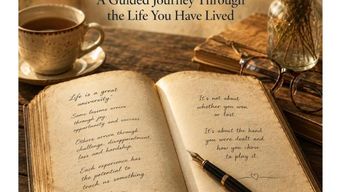
He described people as being like books.
Some books are long.
Some are short.
Some are adventurous.
Some are complicated.
Some make us laugh.
Some change us forever.
And when we reach the end of a book we truly loved, although we feel sadness that the story has ended, we often close the final page reflecting upon why it mattered so much to us in the first place.
In that sense, the story continues to live within us.
And perhaps people do too.
Not necessarily through certainty of belief, doctrine, or explanation, but through memory, influence, love, and the invisible marks they leave upon our lives.
That metaphor never left me.
And over the years, life has occasionally forced me to revisit it.
When Time Slows Down
Several years ago, my wife and I were involved in a motorway accident involving an Army lorry.
One moment we were driving normally down the motorway at around 65 mph.
The next, our car had been clipped from behind as the lorry moved into our lane, leaving us travelling sideways down the road, trapped against the front bumper of the vehicle.
Time seemed to slow down.
I can still remember the chipped green Army bumper edging closer toward my shoulder as the side of our car slowly compressed. I remember hearing the screeching of metal and tyres. I remember fragments of broken glass on my legs. I remember my wife speaking beside me.
And I remember thinking:
Who is going to look after our son?
Oddly, despite the speed of everything happening, there was still time to think.
Time to notice.
Time to reflect.
Time to feel fear.
Thankfully, somehow, we survived physically, although emotionally, it took both of us quite some time to recover from the trauma.
But that experience left me with a lasting awareness:
Even in moments where life changes suddenly, the mind still searches for meaning, connection, responsibility, and unfinished thoughts.
The Questions That Matter
Which raises an interesting question.
If many of us instinctively reflect upon our lives during moments of crisis, loss, or nearing the end…
Why do we so rarely consciously reflect upon them beforehand?
Why do so many important conversations remain unspoken?
Why do so many stories remain untold?
Why do so many lessons learned through struggle disappear with the person who lived them?
Perhaps because we assume there will always be more time.
But life does not always negotiate gently with our assumptions.
And maybe this is why conversations around mortality matter.
Not to become morbid.
Not to become fearful.
But to become more aware.
Because sometimes, when we become more conscious of life’s fragility, we also become more conscious of life’s value.
We may begin asking different questions.
Questions like:
- What memories truly shaped me?
- What unfinished conversations matter most?
- What do I hope people remember about me?
- What have my struggles taught me?
- What values have guided my life?
- What kind of emotional legacy am I leaving behind?
Not because death is the focus.
But because awareness is.
And perhaps one of the deepest forms of awareness is recognising that our lives are not measured only by achievement, productivity, or status, but also by:
- the people we touched,
- the love we gave,
- the struggles we overcame,
- the wisdom we shared,
- and the memories that continue living in others long after we are gone.
The Stories Still Being Written
The older I get, the more I wonder whether one of the hidden purposes of sharing our story is not simply for remembrance, but also for understanding.
Because when people honestly reflect upon their lives, something interesting often happens.
Patterns emerge.
Lessons become clearer.
Old wounds sometimes soften.
Meaning becomes easier to see.
The process itself can become healing.
A form of conscious reflection.
An opportunity to find meaning not only in what happened to us, but in what life may have been trying to teach us through those experiences.
And perhaps, by sharing those reflections honestly, we also help others.
After all, none of us truly moves through life alone.
We learn from each other constantly:
through stories,
through failures,
through courage,
through mistakes,
through love,
through survival.
Perhaps each generation quietly leaves behind notes for the next, helping others navigate their own chapters with a little more awareness than we once had ourselves.
My Life
Which is why, over the past week, I have started exploring an idea for something I’m tentatively calling:
“My Life.”
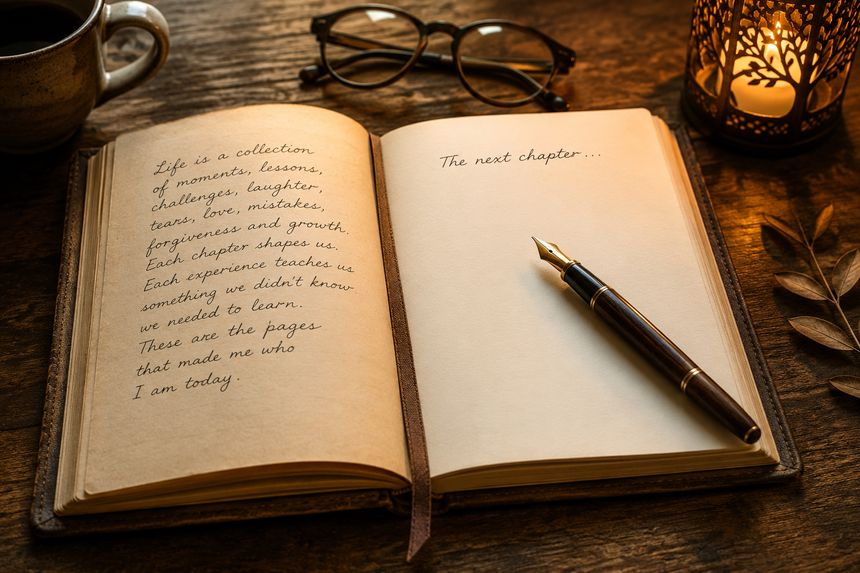
A reflective framework designed to help people consciously capture parts of their story, memories, lessons, and legacy while the story is still being written.
Not simply as a record of dates, events, or achievements, but as a reflection of what shaped them, what mattered to them, and what they hope others might carry forward.
Not as an academic exercise.
Not as something morbid.
But as something deeply human.
Something that says:
“This was my story.
This is what shaped me.
This is what mattered to me.
And this is what I hope lives on.”
I’ll share more about that next week.
But for now, perhaps the deeper question is:
“How consciously do we want to live before the final page?”
/Passle/52fb8de8b00e7e0ac8b58c86/MediaLibrary/Images/2026-08-04-22-43-28-228-6a726b104b0fc817ee6f3cf7.png)